Best Serum Order for Dull Skin
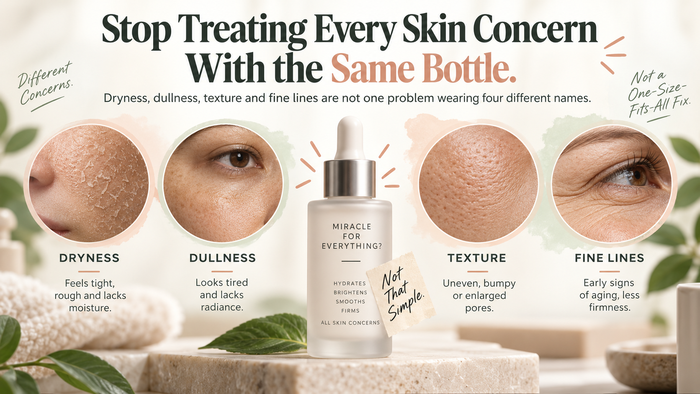
Best Serum Order for Dull Skin is about putting serums into a sequence that avoids pilling and role confusion, with the page anchored to layering order rather than generic serum-order advice.
Main routine goal: putting serums into a sequence that avoids pilling and role confusion
Key sequence signal: layer hierarchy
Exact search problem
A reader searching for Best Serum Order for Dull Skin is usually trying to solve putting serums into a sequence that avoids pilling and role confusion, not memorize another ingredient list.
A reader searching for Best Serum Order for Dull Skin is usually trying to solve putting serums into a sequence that avoids pilling and role confusion, not memorize another ingredient list. The page should answer one narrow question: how layer hierarchy changes the order, timing, and tolerance of the routine. That is different from pages built around wait-time gap, because the buyer enters with a different source of confusion. The practical mistake is treating sequence map as an afterthought and then adding more products when the sequence feels wrong. The decision test is simple: change one step, keep the rest stable, and watch whether the routine behaves better under real use. This section uses the best serum order for dull skin scenario deliberately so the page does not collapse into a duplicate of a neighboring guide.
Why this page is not the same as the others
The page should answer one narrow question: how texture order changes the order, timing, and tolerance of the routine.
The page should answer one narrow question: how texture order changes the order, timing, and tolerance of the routine. That is different from pages built around absorption checkpoint, because the buyer enters with a different source of confusion. The practical mistake is treating best_serum_order_for_dull_skin_intent_4 as an afterthought and then adding more products when the sequence feels wrong. The decision test is simple: change one step, keep the rest stable, and watch whether the routine behaves better under real use. This section uses the best serum order for dull skin scenario deliberately so the page does not collapse into a duplicate of a neighboring guide. A reader searching for Best Serum Order for Dull Skin is usually trying to solve putting serums into a sequence that avoids pilling and role confusion, not memorize another ingredient list.
First decision point
That is different from pages built around sequence map, because the buyer enters with a different source of confusion.
That is different from pages built around sequence map, because the buyer enters with a different source of confusion. The practical mistake is treating best_serum_order_for_dull_skin_sequence_marker as an afterthought and then adding more products when the sequence feels wrong. The decision test is simple: change one step, keep the rest stable, and watch whether the routine behaves better under real use. This section uses the best serum order for dull skin scenario deliberately so the page does not collapse into a duplicate of a neighboring guide. A reader searching for Best Serum Order for Dull Skin is usually trying to solve putting serums into a sequence that avoids pilling and role confusion, not memorize another ingredient list. The page should answer one narrow question: how wait-time gap changes the order, timing, and tolerance of the routine.
Product-order consequences
The practical mistake is treating best_serum_order_for_dull_skin_buyer_filter as an afterthought and then adding more products when the sequence feels wrong.
The practical mistake is treating best_serum_order_for_dull_skin_buyer_filter as an afterthought and then adding more products when the sequence feels wrong. The decision test is simple: change one step, keep the rest stable, and watch whether the routine behaves better under real use. This section uses the best serum order for dull skin scenario deliberately so the page does not collapse into a duplicate of a neighboring guide. A reader searching for Best Serum Order for Dull Skin is usually trying to solve putting serums into a sequence that avoids pilling and role confusion, not memorize another ingredient list. The page should answer one narrow question: how absorption checkpoint changes the order, timing, and tolerance of the routine. That is different from pages built around best_serum_order_for_dull_skin_intent_4, because the buyer enters with a different source of confusion.
When the routine goes wrong
The decision test is simple: change one step, keep the rest stable, and watch whether the routine behaves better under real use.
The decision test is simple: change one step, keep the rest stable, and watch whether the routine behaves better under real use. This section uses the best serum order for dull skin scenario deliberately so the page does not collapse into a duplicate of a neighboring guide. A reader searching for Best Serum Order for Dull Skin is usually trying to solve putting serums into a sequence that avoids pilling and role confusion, not memorize another ingredient list. The page should answer one narrow question: how sequence map changes the order, timing, and tolerance of the routine. That is different from pages built around best_serum_order_for_dull_skin_sequence_marker, because the buyer enters with a different source of confusion. The practical mistake is treating layering_order_angle_4 as an afterthought and then adding more products when the sequence feels wrong.
A better buyer test
This section uses the best serum order for dull skin scenario deliberately so the page does not collapse into a duplicate of a neighboring guide.
This section uses the best serum order for dull skin scenario deliberately so the page does not collapse into a duplicate of a neighboring guide. A reader searching for Best Serum Order for Dull Skin is usually trying to solve putting serums into a sequence that avoids pilling and role confusion, not memorize another ingredient list. The page should answer one narrow question: how best_serum_order_for_dull_skin_intent_4 changes the order, timing, and tolerance of the routine. That is different from pages built around best_serum_order_for_dull_skin_buyer_filter, because the buyer enters with a different source of confusion. The practical mistake is treating best_4_routine_case as an afterthought and then adding more products when the sequence feels wrong. The decision test is simple: change one step, keep the rest stable, and watch whether the routine behaves better under real use.
Final page-specific rule
A reader searching for Best Serum Order for Dull Skin is usually trying to solve putting serums into a sequence that avoids pilling and role confusion, not memorize another ingredient list.
A reader searching for Best Serum Order for Dull Skin is usually trying to solve putting serums into a sequence that avoids pilling and role confusion, not memorize another ingredient list. The page should answer one narrow question: how best_serum_order_for_dull_skin_sequence_marker changes the order, timing, and tolerance of the routine. That is different from pages built around layering_order_angle_4, because the buyer enters with a different source of confusion. The practical mistake is treating best_4 as an afterthought and then adding more products when the sequence feels wrong. The decision test is simple: change one step, keep the rest stable, and watch whether the routine behaves better under real use. This section uses the best serum order for dull skin scenario deliberately so the page does not collapse into a duplicate of a neighboring guide.
Decision table
| Field | Page-specific answer | Reason |
|---|---|---|
| Topic lens | layering order | putting serums into a sequence that avoids pilling and role confusion |
| Main marker | layer hierarchy | This cue defines the page's search intent. |
| Secondary marker | texture order | This separates the page from adjacent serum guides. |
| Buyer filter | wait-time gap | This explains when the page is the correct match. |
| Wrong move | Treating absorption checkpoint as generic advice | This creates duplicate content and poor routine decisions. |
| Success signal | The reader can place best serum order for dull skin into a clear routine slot | This is the bottom-funnel outcome. |
When the quiz is faster
Use the quiz when best serum order for dull skin overlaps with dryness, dullness, sensitivity, makeup behavior, or age-related skin changes. The quiz helps identify the first missing serum role before the routine becomes an overcrowded shelf of unused products.
Start Skin QuizRelated sequence guides
Frequently asked questions
What makes Best Serum Order for Dull Skin different?
It focuses on layering order and the specific decision around layer hierarchy.
What should I decide first?
Decide whether the routine problem is really putting serums into a sequence that avoids pilling and role confusion or whether another guide fits better.
What is the first practical test?
Change one routine step and watch texture, comfort, sunscreen behavior, and visible finish.
Can I combine it with other serums?
Yes, but only when each serum has a separate job and the order is controlled.
What is the most common mistake?
The mistake is treating wait-time gap as a generic serum issue instead of a page-specific decision.
Should this be morning or night?
Morning is better when sunscreen or makeup compatibility matters. Night is better for comfort, support, or renewal.
What if my skin feels tight?
Move hydration and comfort earlier before stronger active steps.
What if products pill?
Use less product, wait longer, and reduce layers before blaming the formula.
What if I already own several serums?
Identify which one performs the missing role and remove unnecessary overlap.
When should I use the quiz?
Use the quiz when best serum order for dull skin overlaps with another concern and the first serum role is unclear.
Confirm your serum order
Match the concern to the correct role, timing, and layer before adding another product.
Start Skin Quiz